Vedic Art
Wat is Vedic Art?
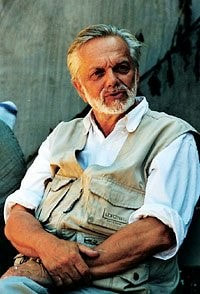
Curt Källman,
fine artist.
1938 -2010
Photo: https://www.vedicart.com/
|
Vedic Art is ontwikkeld door de Zweedse kunstenaar Curt Källman. Hij creëerde een methode waarin hij de academische schilderkunst combineerde met de Vedische filosofie.
De oude leer van de Vedas maakt duidelijk dat alle kennis die we nodig hebben om te creëren reeds in ons aanwezig is, het zit in onze natuur. Doorheen 17 principes ga je op weg om deze verborgen kennis te herinneren en de natuurlijke wetten die in ons aanwezig zijn te activeren. Vedic Art is er voor iedereen; of je een opleiding gevolgd hebt of helemaal geen ervaring hebt met schilderen is van geen belang. “Vedic Art leert je niet hoe je moet schilderen. Vedic Art is een methode die je helpt te herinneren hoe je schildert.” Curt Källman |
Hoe verloopt een cursus?
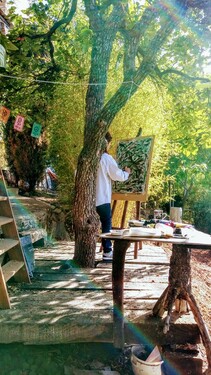
De cursussen vinden plaats in een gemoedelijke sfeer en in een natuurlijke omgeving.
De 17 prinicipes zijn praktische tools om onze creativiteit weer te doen stromen, ze omvatten de verschillende aspecten van het creatieve potentiëel waarmee we geboren zijn.
Daarom voelen ze ook familiair aan, we herkennen ze vanuit het dagelijkse leven of wanneer we voordien al geschilderd hebben. Ze spreken over het natuurlijke leven en creativiteit.
Elke dag komen we samen voor één of meerdere korte momenten, afhankelijk van de cursus die je volgt, waarin de teacher de principes één voor één doorgeeft. Daarna ben je vrij om te schilderen.
Vrijheid is de sleutel!
Vedic Art nodigt je uit om wakker te worden en verantwoordelijkheid te nemen voor je eigen proces, in het leven en in de creativiteit.
Terwijl je schildert ontwaken gevoelens, je komt meer en meer thuis bij jezelf en tegelijk zal je het hele proces van creatie ervaren. Op dat moment smelten kunst en het leven samen.
Je teacher is aanwezig voor ondersteuning of als je iets wil delen maar komt niet in jouw persoonlijke ruimte gedurende je schilderproces. Dit geeft je de veiligheid om het plezier van het creëren te ervaren, alles is goed, niets moet. Er wordt niet vergeleken, niet geoordeeld, geen commentaar gegeven. Het gaat over jouw persoonlijk avontuur, jouw spel met vormen en kleuren die vanuit je binnenste naar buiten komen.
De 17 prinicipes zijn praktische tools om onze creativiteit weer te doen stromen, ze omvatten de verschillende aspecten van het creatieve potentiëel waarmee we geboren zijn.
Daarom voelen ze ook familiair aan, we herkennen ze vanuit het dagelijkse leven of wanneer we voordien al geschilderd hebben. Ze spreken over het natuurlijke leven en creativiteit.
Elke dag komen we samen voor één of meerdere korte momenten, afhankelijk van de cursus die je volgt, waarin de teacher de principes één voor één doorgeeft. Daarna ben je vrij om te schilderen.
Vrijheid is de sleutel!
Vedic Art nodigt je uit om wakker te worden en verantwoordelijkheid te nemen voor je eigen proces, in het leven en in de creativiteit.
Terwijl je schildert ontwaken gevoelens, je komt meer en meer thuis bij jezelf en tegelijk zal je het hele proces van creatie ervaren. Op dat moment smelten kunst en het leven samen.
Je teacher is aanwezig voor ondersteuning of als je iets wil delen maar komt niet in jouw persoonlijke ruimte gedurende je schilderproces. Dit geeft je de veiligheid om het plezier van het creëren te ervaren, alles is goed, niets moet. Er wordt niet vergeleken, niet geoordeeld, geen commentaar gegeven. Het gaat over jouw persoonlijk avontuur, jouw spel met vormen en kleuren die vanuit je binnenste naar buiten komen.
Wie is Maryse?
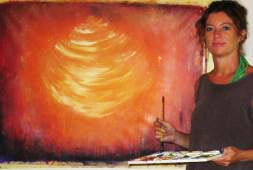
Maryse Alen is een Belgisch kunstenaar. Ze is Vedic Art teacher sinds 2012 en woont momenteel in Spanje, Andalucia, waar ze haar cursussen organiseert. Regelmatig reist ze naar België om opleiding te geven.
Haar enthousiasme en inzet om Vedic Art door te geven aan ieder die zijn/haar eigen reis doorheen de rivier van kunst en leven wenst te starten, is sterk en tegelijk zacht, bezield en oprecht
Wil je graag meer weten over haar biografie en hoe Vedic Art op haar pad kwam. Zie Maryse.
Haar enthousiasme en inzet om Vedic Art door te geven aan ieder die zijn/haar eigen reis doorheen de rivier van kunst en leven wenst te starten, is sterk en tegelijk zacht, bezield en oprecht
Wil je graag meer weten over haar biografie en hoe Vedic Art op haar pad kwam. Zie Maryse.
"The seventeen Vedic Principles of Art can be used as a navigation map on our journey along the river of the history of art. We start from a point of silence and one day we reach the ocean of boundless dynamic creativity inside ourselves.To study Vedic Art is to study one’s personal self in a relationship with the great cosmic self. Our inner driving force sets us in motion and guides us step by step into seeing how nature works. We begin to remember how to express ourselves from within, and we dive deeper into the creative process. This leads into expansion on all levels, both in art and in our lives. In Vedic Art it is not necessary to teach anyone how to paint--instead it is the way to remember how it happens.”
Curt Källman
